


1. What Is an Industrial Dust Collection System? A Solution for Environmental Protection and Improved Production Efficiency
In industrial manufacturing environments, dust not only reduces air quality but also directly affects workers' health, equipment service life, and a company's operational efficiency. That is why industrial dust collection systems have become an indispensable component of modern factories.

So, what is an industrial dust collection system? How does it work? And why should businesses invest in one from the beginning? Let's explore these questions in the article below.
2. What Is an Industrial Dust Collection System?
An industrial dust collection system is an integrated system of equipment designed to capture, convey, separate, and remove dust generated during manufacturing processes before releasing clean air back into the environment.
Depending on the characteristics of the dust and the manufacturing industry, each system is custom-designed to achieve optimal collection efficiency, helping businesses maintain a safe working environment while complying with industrial emission regulations.
3. Why Should Businesses Invest in an Industrial Dust Collection System?
Many companies only begin to consider dust control systems after their workshops become heavily contaminated with dust, equipment starts deteriorating, or environmental authorities conduct inspections. However, investing early provides substantial long-term benefits.
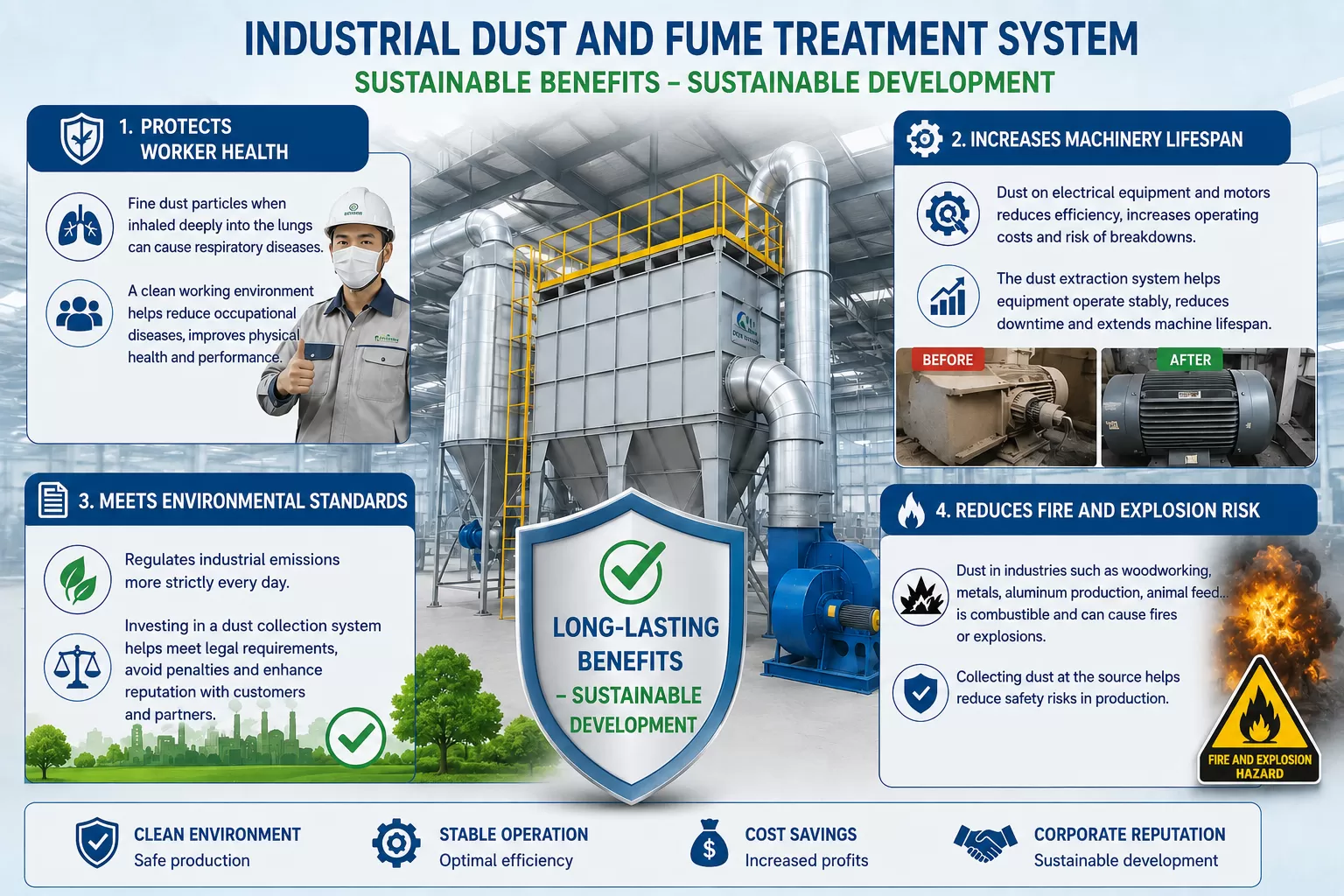
Protect Workers' Health
Fine dust particles are extremely small and can penetrate deep into the lungs, causing various respiratory diseases. A clean working environment reduces the risk of occupational illnesses while improving employee well-being and productivity.
Extend Equipment Service Life
Dust accumulation on mechanical components, electrical control cabinets, motors, and production lines reduces operating efficiency, increases maintenance costs, and raises the risk of equipment failure.
An efficient dust extraction system keeps machinery operating reliably and minimizes production downtime.
Comply with Environmental Standards
Environmental regulations governing industrial emissions are becoming increasingly stringent. Installing a dust collection system enables businesses to comply with legal requirements, reduce the risk of penalties, and enhance their reputation with customers and business partners.
Reduce Fire and Explosion Risks
In industries such as woodworking, metallurgy, aluminum production, and animal feed manufacturing, combustible dust can ignite or explode when it accumulates at high concentrations.
Capturing dust directly at the source significantly reduces these safety hazards.
4. How Does an Industrial Dust Collection System Work?
A complete dust collection system typically operates through the following stages:
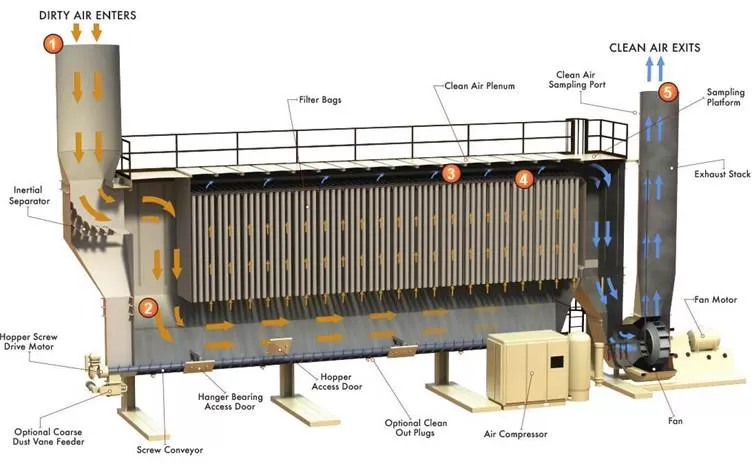
Step 1: Dust capture hoods collect dust directly at the source.
Step 2: An industrial exhaust fan creates negative pressure, conveying dust through the ductwork.
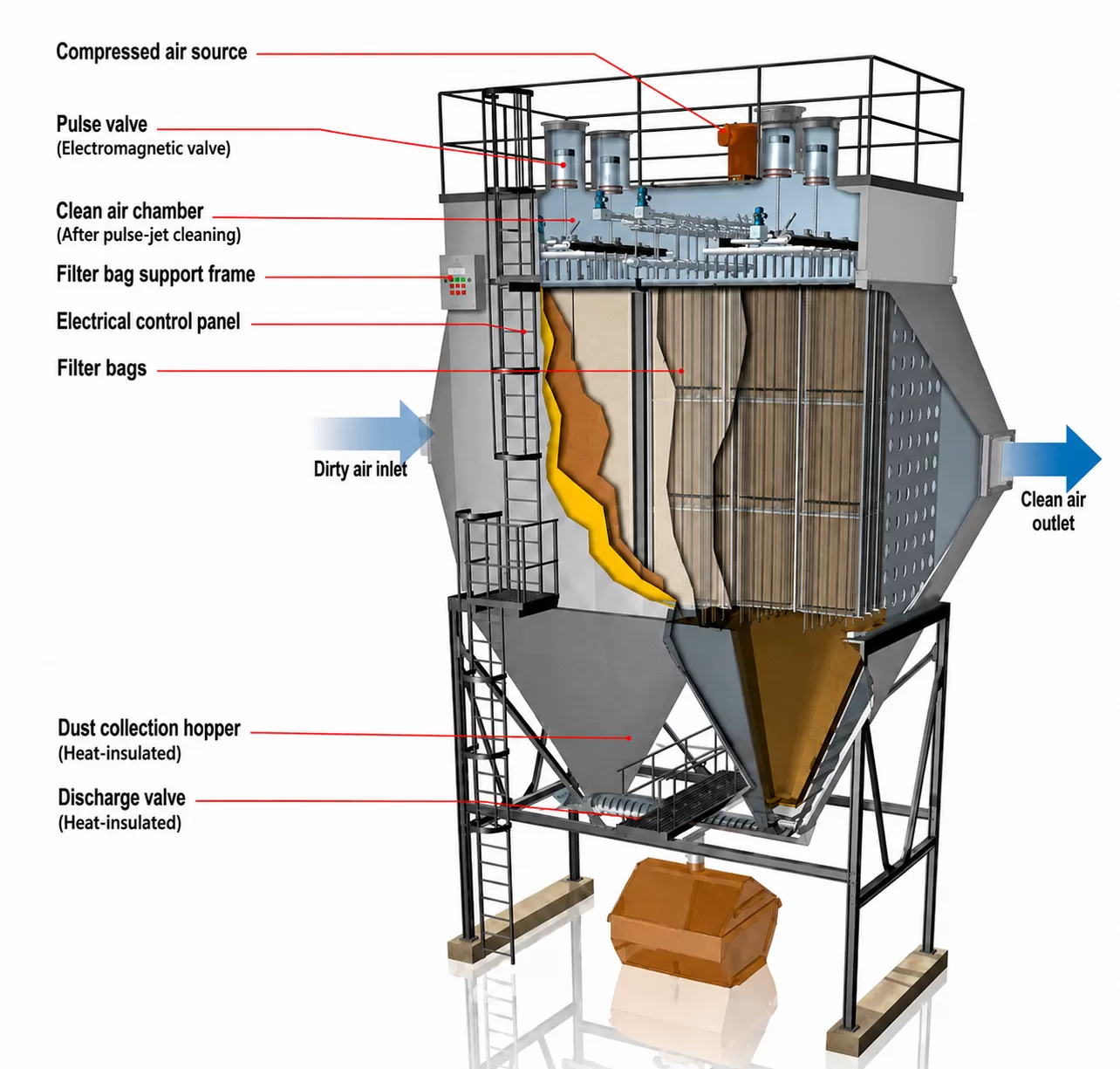
Step 3: Dust is separated and retained by filter bags, cartridge filters, or a cyclone separator.
Step 4: The collected dust is discharged into a dust hopper.
Step 5: Clean air is released back into the atmosphere or recirculated into the workshop.
This process significantly reduces airborne dust within the factory, creating a cleaner and better-ventilated production environment.
5. Common Types of Industrial Dust Collection Systems
5.1 Baghouse Dust Collector
This is the most widely used industrial dust collection solution today.
Advantages
-
Filtration efficiency of up to 99%
-
Excellent fine dust collection performance
-
Suitable for high airflow volumes
-
Cost-effective operation
Disadvantages
-
Requires regular filter media cleaning (pulse-jet cleaning)
-
Filter bags require periodic replacement
Applications
-
Cement plants
-
Metal fabrication workshops
-
Metallurgical plants
-
Foundries
5.2 Cartridge Dust Collector
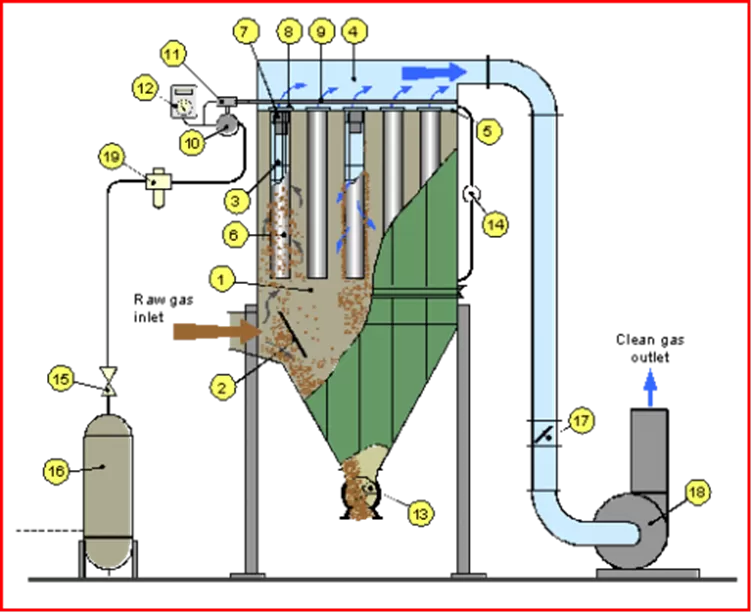
This system uses pleated cartridge filters to maximize filtration area within a compact space.
Advantages
-
Compact footprint
-
Highly effective for ultra-fine dust
-
Easy cartridge replacement
-
Space-saving design
Disadvantages
-
Higher initial investment cost
-
Not suitable for high-temperature dust
-
Not suitable for wet or sticky dust
-
Filter lifespan depends on dust characteristics
Suitable for
-
Dry dust
-
Fine particulate dust
5.3 Cyclone Dust Collector
A cyclone separator uses centrifugal force to separate dust particles from the airflow.
Advantages
-
Low investment cost
-
High dust collection efficiency with large airflow capacity
-
Robust construction and low noise level
-
Stable operation in dusty and humid environments
-
No filter media required
-
Low maintenance requirements
Disadvantages
-
Cannot effectively collect sticky dust
-
High pressure drop
Suitable for
-
Coarse dust
-
Metal chips and shavings
-
Sawdust
-
Fly ash and bottom ash
5.4 Wet Scrubber Dust Collection System
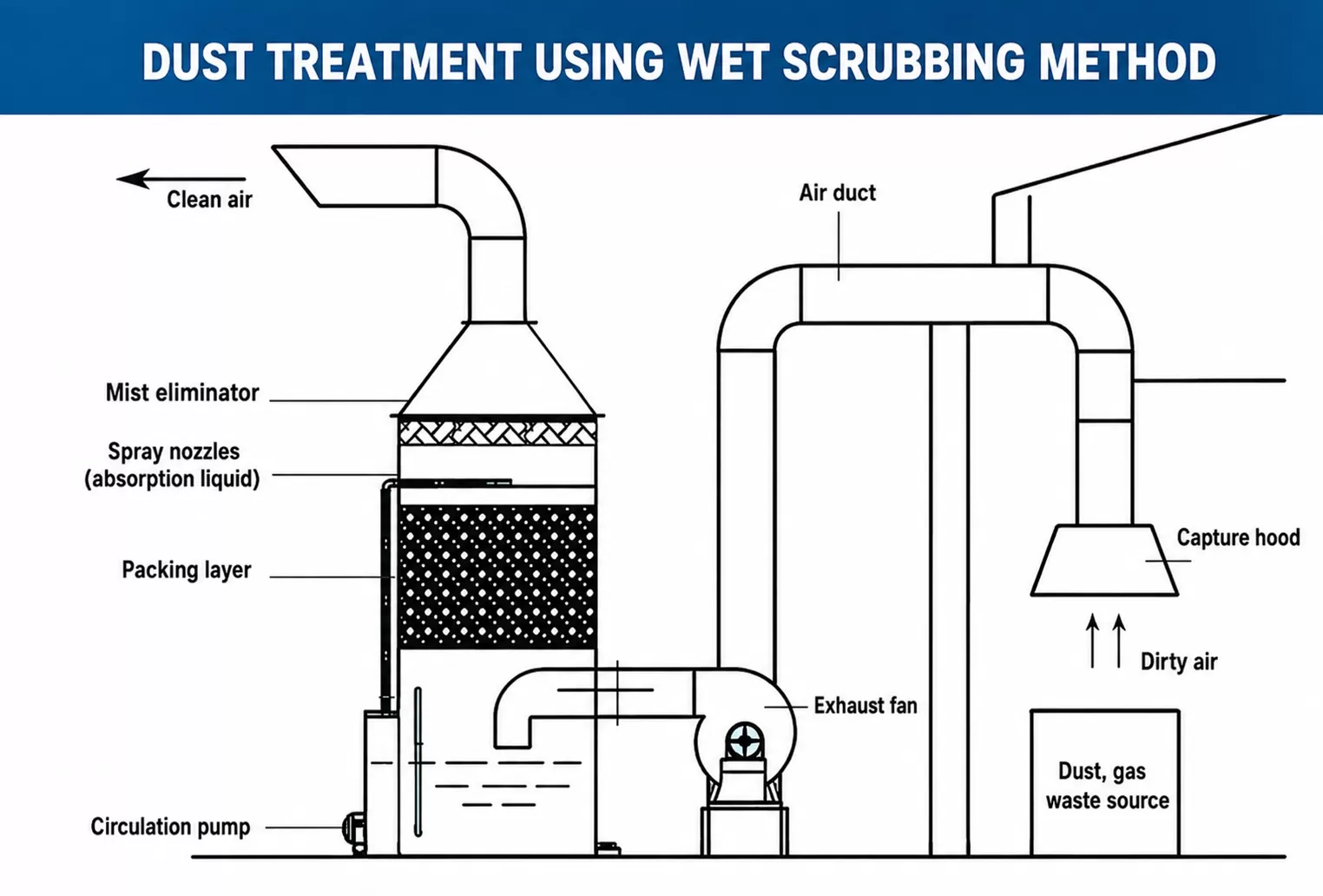
This system uses water to capture dust particles and is commonly applied in chemical processing, metallurgy, and high-temperature industrial processes.
Advantages
-
High dust collection efficiency, capable of capturing particles as small as 0.1 μm
-
Low fire and explosion risk
-
Simultaneously removes dust, vapor, and gaseous pollutants
-
Suitable for high-temperature and high-humidity environments
Disadvantages
-
Collected dust becomes sludge, requiring wastewater treatment and increasing operating costs
-
Corrosive gases require corrosion-resistant materials for equipment and ductwork
Suitable for
-
High-temperature dust
-
Wet or sticky dust
-
Combustible dust
-
Exhaust gases containing chemical vapors or acidic gases
-
Systems requiring integrated dust removal, deodorization, toxic gas absorption, and exhaust gas cooling
5.5 Electrostatic Precipitator (ESP)
An electrostatic precipitator uses electrostatic forces to capture dust particles and airborne contaminants.
Advantages
-
Dust collection efficiency of up to 99%
-
Capable of capturing particles as small as 0.1 μm
-
Suitable for very large gas volumes
Disadvantages
-
High capital investment
-
Requires a large installation area
Suitable for
-
Fine and ultra-fine dust
-
Metallurgical dust
-
Metal fumes
6. Criteria for Selecting the Right Dust Collection System
To ensure long-term performance, businesses should evaluate the following factors:
-
Dust characteristics
-
Particle size
-
Gas temperature
-
Humidity
-
Required airflow volume
-
Available installation space
-
Initial investment cost
-
Operating cost
-
Maintenance requirements
Selecting the right solution from the beginning can significantly reduce lifetime operating costs.
7. Why Choose a Professional Dust Collection System Designer and Installer?
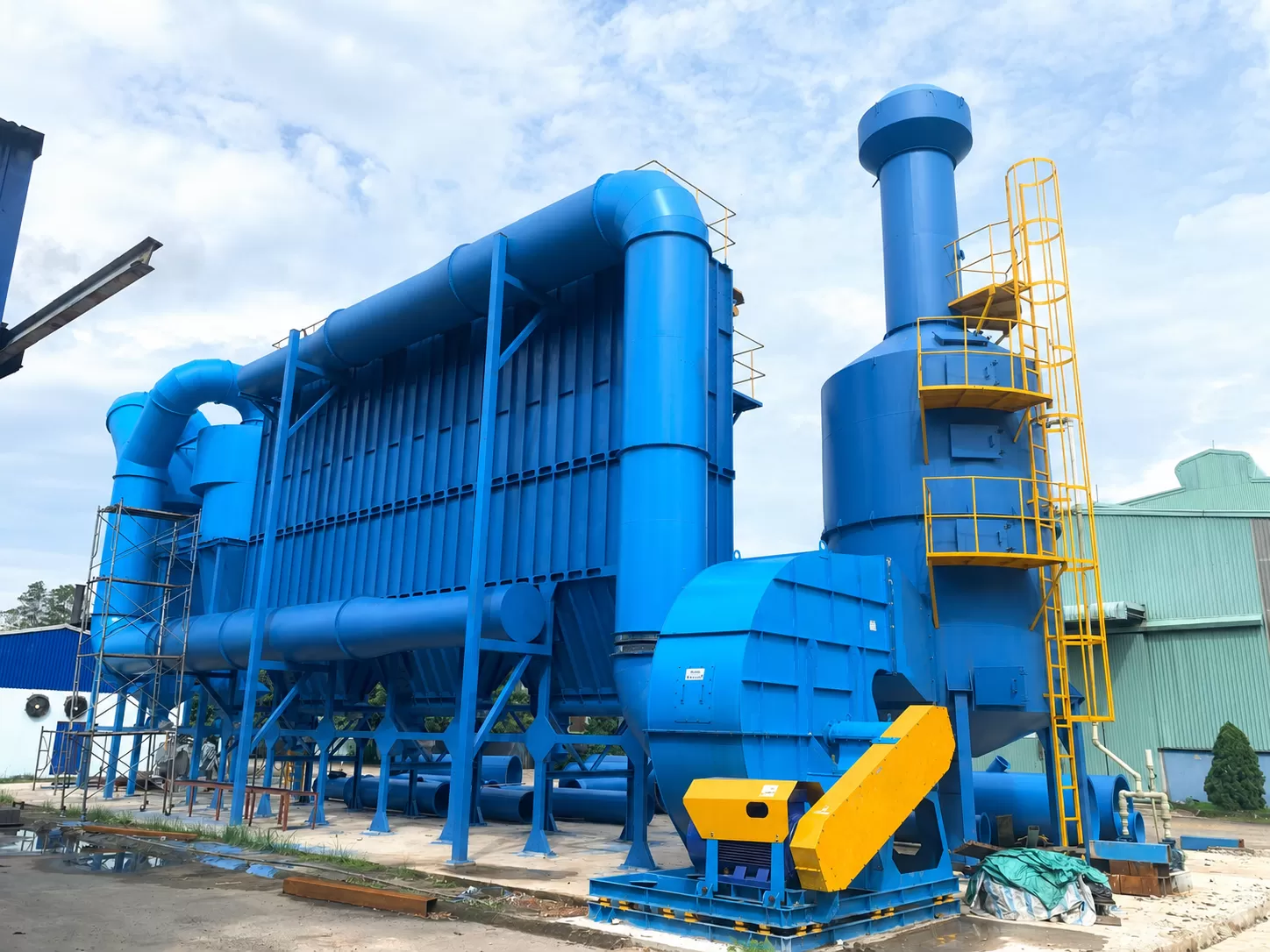
An efficient dust collection system depends not only on the equipment itself, but also on site assessment, airflow calculations, ductwork design, exhaust fan selection, and overall system optimization.
An experienced engineering contractor helps businesses:
-
Design a system based on actual production requirements
-
Reduce energy consumption
-
Ensure high dust collection efficiency
-
Lower maintenance costs
-
Facilitate future expansion
-
Guarantee reliable long-term operation
TDH – Your Partner in Building a Clean and Safe Manufacturing Environment
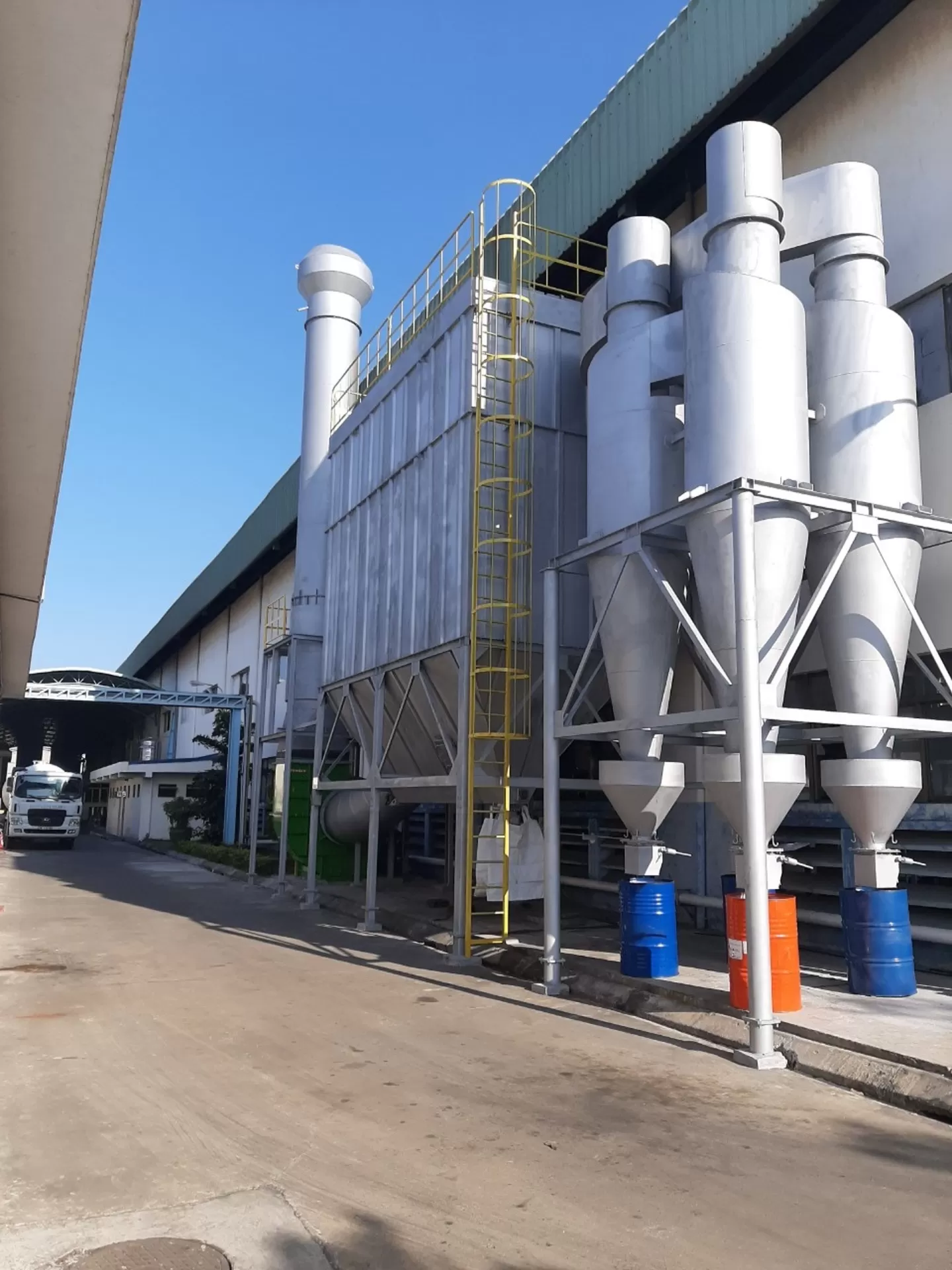
At TDH VIETNAM, we provide custom design, fabrication, and installation of industrial dust collection systems tailored to each customer's operational requirements.
With a team of experienced engineers, TDH is committed to delivering solutions that prioritize safety, efficiency, and energy savings, ensuring reliable operation, long service life, and compliance with current environmental standards.
If your business is looking for an optimal dust collection solution, contact TDH for a detailed site survey and professional consultation.
Comment